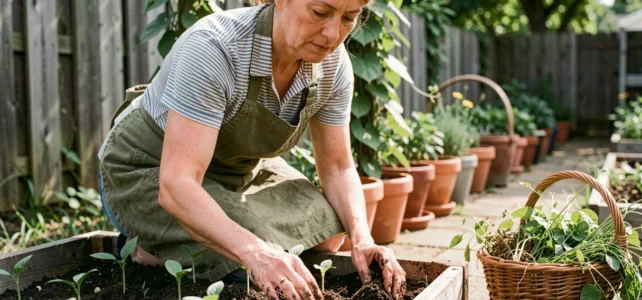
Organic gardening is based on a simple technical principle: nourish the soil rather than the plant. This approach, which excludes any synthetic plant protection products, requires an understanding of a few natural mechanisms before getting hands-on in the soil. In France, individuals no longer have access to synthetic chemical brush cutters or glyphosate-based herbicides, making the use of organic methods not only desirable but mandatory for the regular maintenance of the garden.
Biocontrol and basic substances: what the regulations change for the gardener
Most organic gardening guides talk about compost and mulching. Few address the regulatory framework that, since the Labbé law and its successive extensions, prohibits individuals from purchasing and using synthetic pesticides. This ban now includes chemical brush cutters, which necessitates the use of biocontrol products or mechanical methods to manage weeds.
Sales of active substances usable in organic farming or biocontrol reached their highest historical level in 2024, according to data from the Ministry of Ecological Transition. This trend also concerns amateur gardeners, who are turning to preparations based on sulfur, copper (Bordeaux mixture), black soap, or plant macerates (nettle, horsetail, comfrey).
Specifically, a gardener wishing to treat an early blight on their tomatoes has a few legal options: Bordeaux mixture (to be used sparingly as copper accumulates in the soil), diluted baking soda, or a horsetail decoction as a preventive measure. Resources like jardinage-bio.com detail these preparations and their dosages suitable for amateur gardening.
Soil fertility in organic gardening: understanding before amending
A fertile soil in organic gardening is not a soil stuffed with fertilizers. It is a soil whose microbial life decomposes organic matter and makes nutrients available to the roots. Before adding anything, observing the soil provides more information than a bag of potting soil.
Visual indicators of soil health
The presence of earthworms in quantity, soil that crumbles between the fingers without forming compact blocks, a forest floor smell after rain: these signals indicate proper biological activity. Conversely, a hard crust on the surface, stagnant water, or a sour smell indicate asphyxiated soil.
Permanent mulching is the most cost-effective action to improve tired soil. Dead leaves, straw, chipped branches, dried grass clippings: a layer of several centimeters protects the soil from drying out, limits weed growth, and nourishes soil fauna as it decomposes.
Compost and organic inputs
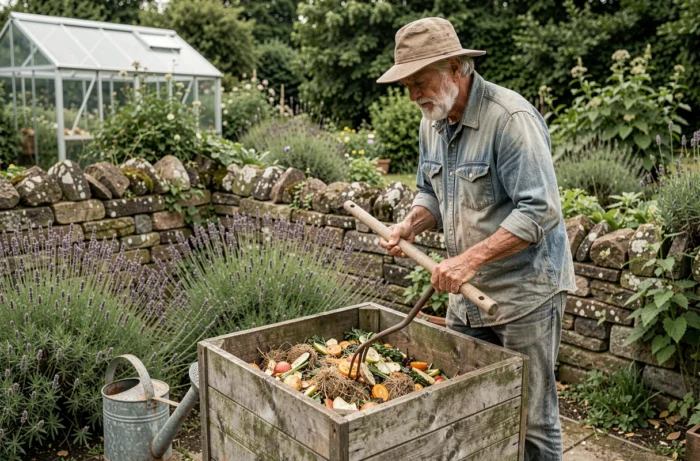
Mature, brown, crumbly compost is used on the surface at the base of nutrient-hungry crops (tomatoes, squash, zucchini). Young compost, with visible pieces, is better suited for mulching on a bed awaiting planting.
- Kitchen compost (peels, coffee grounds, crushed eggshells) provides nitrogen and calcium but must be mixed with carbonaceous material (brown cardboard, dry leaves) to avoid anaerobic fermentation.
- Fresh manure should never be placed directly at the base of plants: it burns the roots. Composting for several months transforms it into a usable amendment.
- Green manures (mustard, phacelia, clover), sown between two crops, fix atmospheric nitrogen and loosen the soil with their roots before being mowed and incorporated.
Water management and irrigation in the organic vegetable garden
Water is the area where mistakes are most costly in organic gardening. Poorly calibrated watering encourages fungal diseases, wastes an increasingly constrained resource, and trains plants to seek water at the surface instead of developing deep roots.
Watering little but deeply yields better results than shallow daily watering. A generous supply once or twice a week, early in the morning or late in the day, allows water to penetrate the lower layers of the soil. The roots go down to seek it, making the plants more resistant to drought.
Mulching, already mentioned for fertility, significantly reduces evaporation. Bare soil in the middle of summer loses a large part of its moisture in just a few hours. A covered soil retains its freshness much longer.
Water recovery and choice of irrigation system
A rainwater collector, even of low capacity, covers part of the needs of a small vegetable garden in spring and autumn. For dry periods, drip irrigation remains the most economical system: it delivers water directly to the base of each plant without wetting the foliage (which limits blight and powdery mildew).
Plant associations and rotations in the organic vegetable garden
Growing the same vegetables in the same place every year depletes the soil of certain elements and encourages the establishment of specific pests. Crop rotation over three or four years alternates botanical families (nightshades, cucurbits, legumes, alliums) to break disease cycles.
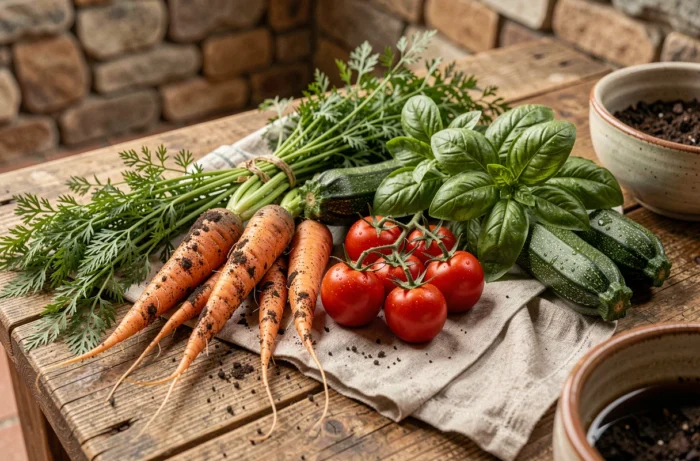
Plant associations exploit concrete interactions between species. Carrots and leeks, grown side by side, protect each other from their respective flies (carrot fly and leek moth). Beans fix nitrogen that benefits neighboring crops.
- Tomatoes and basil share the same needs for heat and water. Basil attracts pollinators beneficial to tomato setting.
- Squash planted at the foot of corn benefit from its partial shade and cover the soil with their large leaves, limiting weeds.
- Marigolds secrete substances through their roots that repel certain nematodes harmful to root vegetables.
These associations do not replace good rotation, but they complement the organic gardener’s arsenal by reducing pest pressure without any inputs.
Daily organic gardening is more about understanding the soil and natural cycles than accumulating techniques. A living, covered, and properly watered soil resolves most problems before they arise. The rest, the plants take care of.