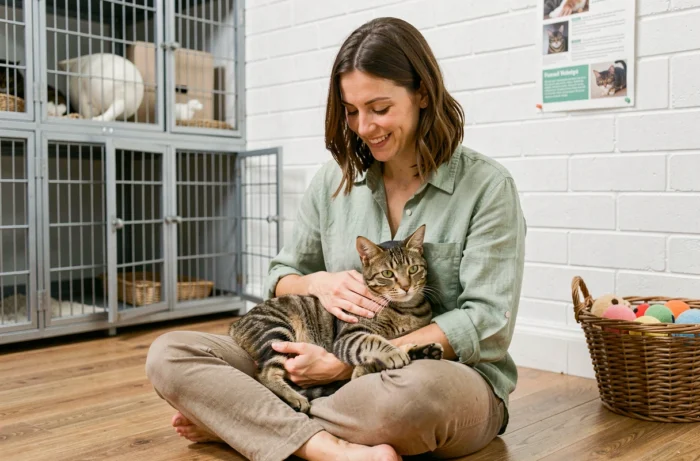
The certificate of commitment and knowledge, mandatory since October 1, 2022, requires a seven-day waiting period before any pet can be transferred. This regulatory framework changes the timeline for adoption, including at shelters. Choosing the right pet starts with factoring this requirement into your schedule—not with an impulsive visit on a Saturday afternoon.
I-CAD registration transfer: the step adopters often overlook
A pet adopted from a shelter or transferred by a private individual should already be identified by microchip or tattoo. Identification alone is not enough: the change of keeper must be registered with I-CAD so your contact details are linked to the animal.
Without this update, the previous keeper’s details remain active in the national database. If your pet runs away or gets lost, anyone who scans the microchip will contact the person on record, not you. Getting your pet back then becomes a matter of chance.
In practice, the person transferring the animal must initiate the process. Make sure the shelter or private individual gives you the transfer document and starts the I-CAD procedure before you leave. We find that this point remains unclear to most first-time adopters, who confuse identifying the animal with registering its new keeper.
The breed profiles and adoption advice available on Top Animaux can help you prepare for this kind of process in advance, even before your first shelter visit.

Finding the right fit for your household: look beyond breed
Choosing a dog or cat based solely on breed leads to repeated mismatches. An individual animal’s temperament matters more than the breed standard when it comes to a successful adoption.
Assess your household’s actual activity level
A herding dog in an apartment with two hours of daily walks can be perfectly well-balanced. The same dog with just thirty minutes outside each day may develop behavioral problems. The deciding factor is not the size of your home, but how much physical and mental stimulation your household can consistently provide over time.
With cats, the question is different. An indoor cat needs vertical enrichment (cat trees, shelves), a rotation of toys, and daily interaction. A cat that had some freedom to roam before adoption may struggle to adjust to a closed apartment without a transition period.
Consider everyone else in the household
Having young children, another pet, or an older person at home changes which animals are a good fit. Shelters assess each animal’s behavior in shared-living situations. Always ask for the shelter team’s behavioral assessment rather than relying on an impression formed during a visit lasting just a few minutes.
The true cost of adoption: plan for the expenses you might not see
Adoption fees at shelters generally cover identification, spaying or neutering, and initial vaccinations. This upfront amount represents only a fraction of the actual annual cost.
- Food suited to the animal’s species, size, and age is the main recurring expense. Quality food for a medium-sized dog costs considerably more than food for a cat.
- Routine veterinary care (booster shots, parasite prevention, dental cleaning) adds up every year, not including unexpected surgery or chronic conditions.
- Pet health insurance is optional but recommended, and can help spread out veterinary costs. Deductibles and coverage limits vary considerably from one policy to another.
- Holiday care costs (boarding or a pet sitter) are often overlooked when adopting.
Estimating the total cost over your pet’s lifetime helps prevent financial hardship from leading to abandonment, which remains one of the main reasons animals end up in shelters.

Cooling-off period and certificate of commitment: what the law requires
The certificate of commitment and knowledge is not a mere administrative formality. It requires the prospective owner to confirm that they understand the species’ specific needs, the financial implications, and the legal obligations involved in keeping the animal.
The transfer can take place only after a seven-day period following the signing of the certificate. This also applies to shelter adoptions, which means planning at least two visits: one to meet the animal and sign the certificate, and a second to bring the animal home.
Check the practical details of the transfer
Before signing, find out who will provide the certificate. At a shelter, it is the organization. A breeder or private individual must provide it when transferring an animal. Failing to provide this document is an offense.
Also check that the health record is up to date, that the identification number matches the animal you are being shown, and that the transfer agreement specifies any return conditions. A reputable shelter offers a return clause if the adoption does not work out, protecting both the adopter and the animal.
Taking these administrative and financial requirements into account from the outset greatly reduces the risk of an adoption failing. The legal waiting period exists for precisely this reason: to turn a desire into an informed, well-documented, and lasting decision.