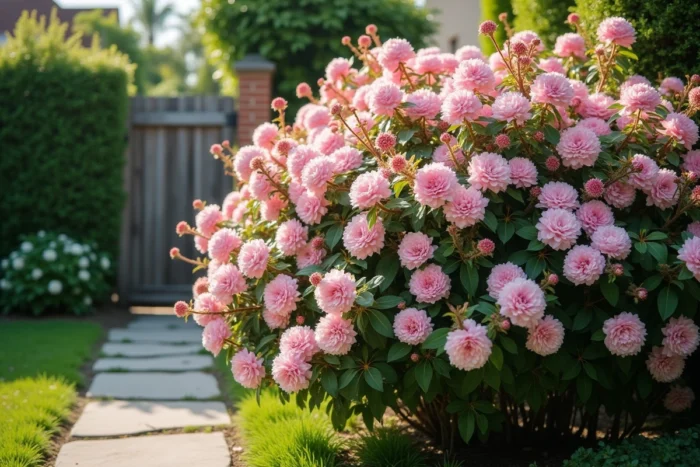
A flowering shrub with pink flowers is primarily defined by its blooming palette, ranging from pale pink to deep fuchsia, and by its woody habit, which distinguishes it from herbaceous perennials. The choice depends on three technical parameters that determine the success of the planting: the nature of the soil, solar exposure, and the hardiness of the species in relation to the local climate.
Soil and exposure: the technical foundation before any selection
Before comparing varieties, assessing the terrain eliminates half of the options. A calcareous soil immediately rules out rhododendrons and camellias, which require an acidic pH. Conversely, a heavy clay soil is well-suited for spireas and deutzias, provided that drainage remains adequate.
Exposure dictates the duration and intensity of flowering. A full-sun pink shrub blooms longer than in partial shade, but some species like hydrangeas prefer filtered light in the afternoon to avoid petal burn. Testing the soil pH with a kit from a garden center and observing sunlight exposure over a full day are two preliminary steps that prevent costly mistakes.
To choose a pink flowering shrub suitable for your space, the intersection of these terrain data and the USDA hardiness zone of your region remains the most reliable method.
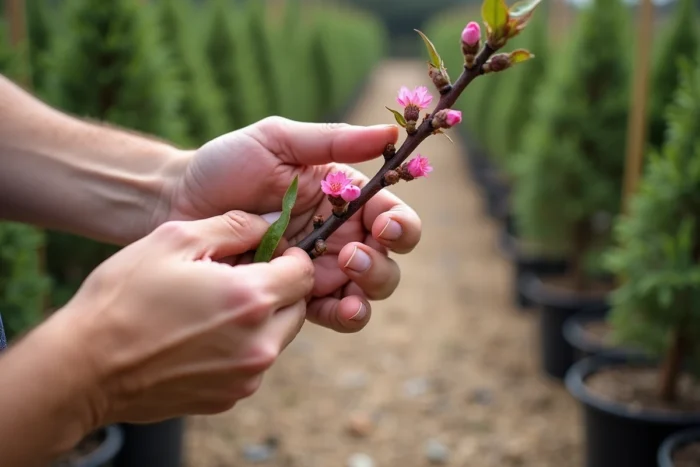
Compact pink shrubs for small gardens and container culture
Nurseries have developed dwarf cultivars specifically designed for city gardens, balconies, and micro-plots. These varieties reach about one to one and a half meters at maturity, making them compatible with large-volume container cultivation.
The pink “Patio” lagerstroemia produces frizzy clusters of flowers all summer in a compact form that does not exceed the railing of a balcony. The compact abelia, on the other hand, offers bell-shaped pink blooms that extend from early summer until the first frosts, with semi-evergreen foliage that remains decorative off-season.
The miniature spirea is another solid option for low beds or terrace borders. Its spring flowering in flat clusters of bright pink requires little maintenance, and light pruning after flowering is enough to maintain a round and dense habit.
- Dwarf pink lagerstroemia: prolonged summer flowering, full sun required, withstands heat and well-drained soils.
- Compact abelia: flowering from early summer to autumn, tolerates partial shade, attracts pollinators with its nectar-rich flowers.
- Dwarf spirea: quick spring flowering, moderate pruning at the end of flowering, thrives in ordinary soil even if calcareous.
Drought tolerance: pink shrubs suited for hotter summers
Increasingly dry summers in temperate climates require a reconsideration of selection. A shrub that requires frequent watering becomes a burden in the garden as well as on the water bill. Prioritizing species tolerant to water stress ensures stable pink flowering even during heatwaves.
The oleander remains the absolute reference for full sun and heat situations. It tolerates poor, dry soils, provided that drainage is impeccable. Its drawback: limited hardiness to regions where winters do not drop below about minus five degrees.
The pink flowering buddleia (butterfly bush) tolerates harsher conditions. It even colonizes poor soils and re-blooms on the wood of the year, allowing for severe pruning at the end of winter without compromising the following flowering.
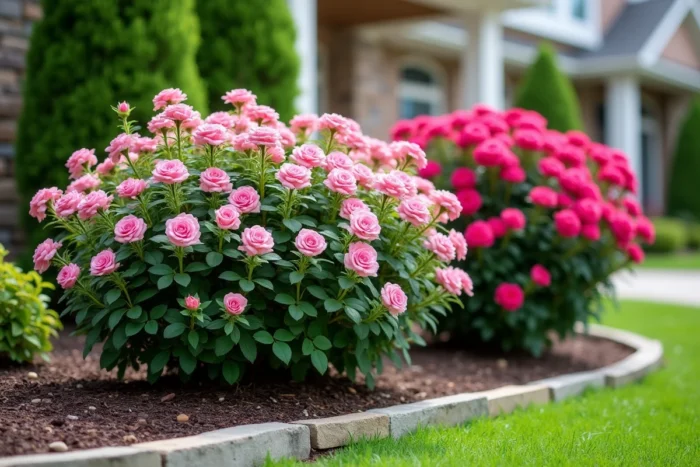
Mulching and appropriate watering
For these tolerant shrubs, the current recommendation moves away from light daily watering. Infrequent but abundant watering encourages deep rooting, which further enhances resistance to drought. An organic mulch several centimeters deep at the base of the shrub limits evaporation and maintains soil freshness between waterings.
Spreading pink flowering from spring to autumn
Planting a single pink shrub produces a color peak for a few weeks, then nothing. The most effective approach is to combine species whose flowering periods alternate.
- Spring (March-May): Vanhoutte spirea, pink flowering Japanese quince, flowering cherry. These three species start early and bring color as winter ends.
- Summer (June-September): lagerstroemia, oleander, pink hibiscus syriacus. These summer blooms withstand heat and occupy the garden during the longest months.
- Autumn (September-November): abelia, some remontant shrub roses, autumn heather. Their late flowering extends the presence of pink until the first frosts.
Three well-chosen shrubs, one for each seasonal period, are enough to maintain a presence of pink flowers for eight months or more. This relay logic also works in pots on a terrace, provided that the containers are grouped to create a mass effect.
Pruning and maintenance: the technical gesture that conditions flowering
Poorly executed pruning is the primary cause of disappointing flowering. The basic principle is summed up in one rule: a shrub that flowers on last year’s wood (spring spirea, Japanese quince) should be pruned just after flowering. A shrub that flowers on the current year’s wood (buddleia, lagerstroemia, hibiscus) should be pruned at the end of winter, before the vegetative resumption.
Confusing these two categories amounts to removing future flowers. Identifying the flowering mode before taking out the pruners is the precaution that makes the difference between a generous shrub and a weak one.
Routine maintenance remains simple: a compost application at the base each spring, renewed mulching, and the removal of dead wood. Pink flowering shrubs do not require intensive fertilization, and an excess of nitrogen promotes foliage at the expense of flowering.
The choice of a pink flowering shrub ultimately hinges on three concrete decisions: the assessment of soil and exposure, the size suited to the available space, and the desired flowering period. A well-placed shrub pruned at the right time produces flowers effortlessly for years.