Renting a car for vacation or a business trip remains a common operation, but disputes over the return of the vehicle continue to generate complaints to consumer associations. Misunderstood excess, bank pre-authorization confused with a debit, sloppy condition reports: points of friction concentrate on a few specific contractual mechanisms. Understanding how they work before signing the rental contract changes the game.
Bank pre-authorization and security deposit: two distinct mechanisms
The first reflex of rental companies is to block an amount on the customer’s credit card. This pre-authorization blocks the limit or balance without immediate debit. The amount remains unavailable for the entire duration of the rental, sometimes a few days longer after the vehicle is returned.
The security deposit, on the other hand, corresponds to a real charge that will be refunded if no damage is found. Both mechanisms may coexist in the same contract. The rental company must inform the customer of the total amount blocked, the conditions for refund, and any exemptions before the rental.
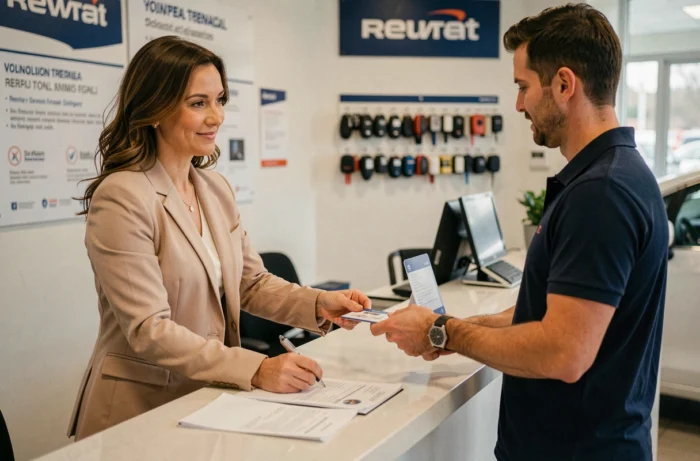
Using a professional car rental service on Carfully allows you to view these conditions in advance and compare practices among rental companies on this specific point.
A standard debit card can be problematic: some rental companies require a credit card with a sufficient limit. Check the type of card accepted at the time of booking, not at the agency on the day of pickup.

Excess, insurance, and buy-back: what the rental contract really covers
Liability insurance is mandatory in any vehicle rental in France. It covers damages caused to third parties. However, damages suffered by the rented vehicle remain the responsibility of the renter, within the limits of the excess specified in the contract.
Excess, security deposit, and reimbursement insurance do not cover the same thing. The excess sets the maximum amount that the renter will pay in the event of a claim. The buy-back option, offered optionally, reduces or eliminates this limit. An external insurance may later reimburse a charged amount, but it does not necessarily eliminate the deposit required by the rental company.
Exclusions deserve careful reading. The following items are frequently excluded from basic coverage:
- Tires, glass, and roof of the vehicle, often outside the scope of standard excess
- Bottom of the body and undercarriage, particularly exposed on unpaved roads
- Loss or damage to keys, charged additionally by almost all rental companies
- Drivers not declared in the contract, non-covered countries, and exceeding rental duration
Before taking out additional insurance with the rental company, check the coverage already offered by your credit card. Some premium cards include car rental coverage, but limits and exclusions vary by issuer.
Vehicle condition report: the method that protects in case of dispute
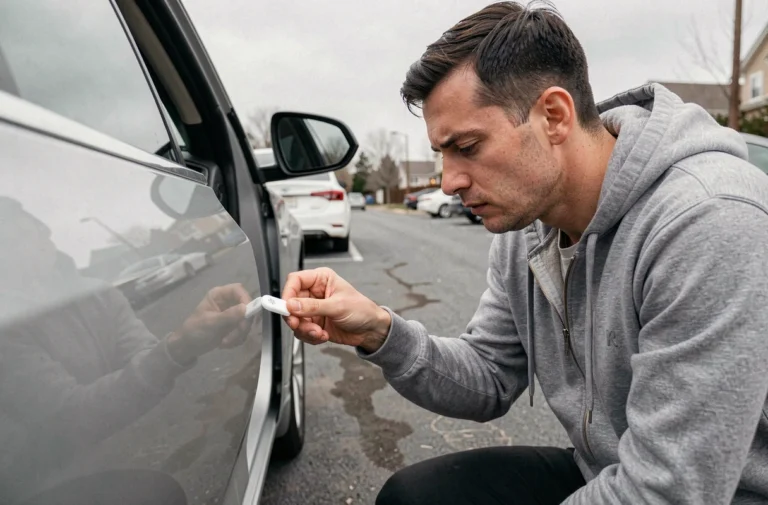
The majority of disputes after return concern damages that the renter believes were pre-existing. The useful proof relies on the comparison between two contradictory condition reports, the one at departure and the one at return. Accumulating photos is not enough if they do not follow the same control logic.
The most solid method is to use the same checklist, the same order of verification, and the same angles at departure and return, with the customer’s signature or presence at each step. In practice, this takes a few extra minutes, but it constitutes the only usable basis in case of disagreement.
Electric vehicles: an additional control point
Electric cars add a specific risk of dispute. The condition report must document not only the mileage but also the charge level, active indicators, and accessories (charging cable, adapter). Some contracts provide for fees related to insufficient charging upon return.
Note the battery percentage on the departure document. If the contract mentions an obligation to return at a specific charge level, failure to comply with this clause may result in additional charges.

Disputing a charge after return: concrete remedies
You discover an unexpected charge on your bank statement after returning the vehicle. The first step is to contact the rental company in writing (email or registered letter) requesting details of the charged amounts and the associated evidence, including photos of the return condition report.
The professional must provide proof that the damage did not exist at departure. Without a signed contradictory condition report from both parties, their position is weaker. Field feedback varies on this point: some rental companies accept a quick amicable resolution, while others maintain the charge until a mediator is involved.
If the dispute persists, several avenues exist:
- Contact the tourism mediator or the sector mediator designated in the contract’s general conditions
- Contact the DGCCRF via the SignalConso platform to report a questionable commercial practice
- Oppose the charge with the bank if the amount exceeds the initially agreed deposit, providing the case documents
Keeping all documents (contract, condition reports, written exchanges, toll or fuel receipts) for several months after the end of the rental remains the most effective precaution. A complete file often discourages abusive charges even before reaching the stage of formal dispute.