
In Switzerland, we consume as if we had three planets. More than 70% of the environmental impacts related to final consumption occur abroad, according to the FOEN. Adopting an ecological lifestyle in everyday life does not primarily start with waste sorting, but with three much heavier areas: food, housing, and mobility.
Energy Renovation in Switzerland: The Task Everyone Delays
People often start by changing their light bulbs or lowering the thermostat by one degree. These actions matter, but they remain marginal compared to a poorly insulated building that has been burning heating oil for thirty years.
The concrete approach in Switzerland follows a specific order. First, an energy diagnosis of the building is carried out (CECB, the cantonal certificate). Then, a coordinated renovation strategy is established, because insulating windows without addressing ventilation creates humidity problems. Finally, subsidy applications must be submitted before the work begins, not after.
Responses vary on this point, but most homeowners who switch from fossil heating to a heat pump notice a significant decrease in their bills from the first year. For tenants, the margin for action comes through dialogue with the property management and choosing a renewable electricity supplier, an option available in most cantons.
Concrete ways to reduce one’s environmental footprint can be found, including on domestic energy consumption, at https://www.tous-eco.ch/, which brings together several sectors related to sustainable development in Switzerland.
Food and Climate Footprint: What Really Matters on the Plate
Food accounts for more than a quarter of the total environmental impact of a Swiss household. The population consumes an average of one kilogram of meat per week per person, while nutritional recommendations suggest significantly less. If everyone adhered to these recommendations, Switzerland would hardly need to import feed anymore.
Reducing meat consumption is the dietary action with the greatest climate leverage. We are not talking about becoming vegan overnight, but about moving from daily meat consumption to two or three meat meals per week.
The other concrete angle is sourcing. Buying seasonal and local products reduces the footprint related to transportation and refrigerated storage. In practice, this means:
- Favoring local markets or farm subscription baskets, available in most Romandy and German-speaking cantons
- Systematically checking the country of production in supermarkets, even for organic products (an organic avocado from Peru remains problematic)
- Planning meals for the week to reduce food waste at the source, rather than relying on composting afterward
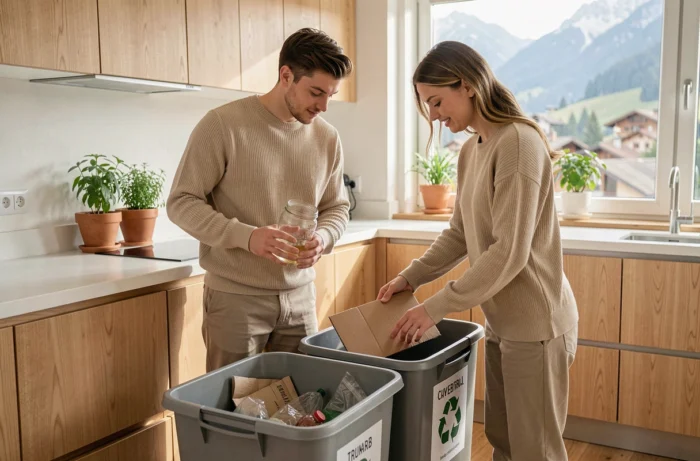
The University of Geneva structures eco-consumption around the 9Rs: refuse, reduce, reuse, and repair come before recycling. This framework directly applies to food, where refusing unnecessary packaging is better than sorting it correctly.
Sustainable Mobility in Switzerland: Balancing Comfort and Emissions
Flying less and driving less are, along with plant-based eating, the individual actions with the greatest impact on the climate. The Swiss public transport network facilitates this transition more than in most European countries, but practical barriers are often underestimated.
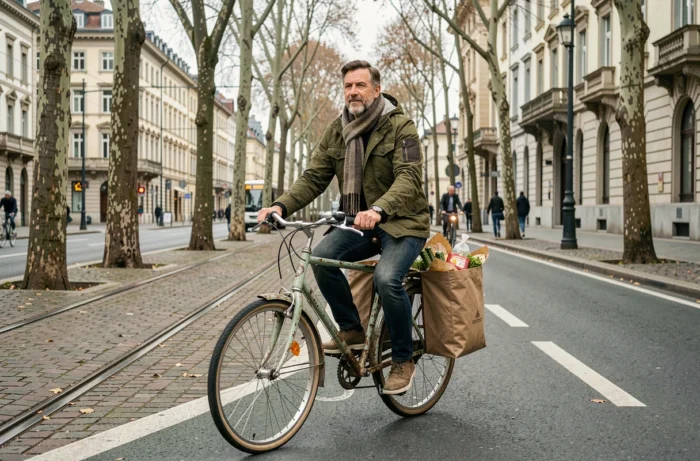
For commuting, switching to an electric bike replaces the car for distances of up to 15 or 20 kilometers, even in hilly areas. Swiss companies are increasingly offering mobility plans that include subsidies for purchasing an electric bike or a discounted Swiss Federal Railways (CFF) subscription.
On the car side, the choice of vehicle is significant. An electric model powered by the Swiss electricity mix (largely hydroelectric and renewable) emits significantly less than a thermal model over its lifetime. Driving style also matters: smooth driving, without harsh accelerations, measurably reduces fuel consumption.
Digital Sobriety and Second-Hand Consumption: Recent Angles
We rarely think about the environmental weight of digital technology. Storing thousands of photos in the cloud, streaming high-definition video, renewing your smartphone every two years: these habits have a cost in energy and mining resources.
Recent recommendations in Switzerland emphasize two concrete axes:
- Extending the lifespan of electronic devices by having them repaired rather than replaced (participatory repair workshops exist in most Swiss cities)
- Buying second-hand when possible, from clothing to furniture to appliances
- Limiting unnecessary cloud storage and disabling autoplay for videos on social media
The 9R framework applied to digital technology places refusal and reduction before any technological solution. Specifically, not buying a connected device that you don’t need remains the most effective action.
Drinking Water in Switzerland: Comfort That Masks Waste
Switzerland has abundant and high-quality drinking water. This situation creates a blind spot: we consume without counting because the resource seems unlimited. However, recent summer drought episodes have shown the limits of the system in certain cantons.
Reducing water consumption involves simple but systematic actions: installing aerators on faucets, preferring short showers to baths, collecting rainwater for the garden. These are investments of a few francs that sustainably reduce household consumption.
However, the largest lever remains indirect: food production consumes considerable volumes of water, especially for meat. Reducing the consumption of animal products also decreases one’s water footprint, an effect rarely visible on the bill but very real at the national level.
Adopting a more ecological lifestyle in Switzerland does not require changing everything at once. The diagnosis of housing, the contents of the plate, and the choice of mode of transport form the foundation. The rest, from digital technology to water, complements an approach that benefits from being gradual and rooted in sustainable habits rather than in one-off resolutions.