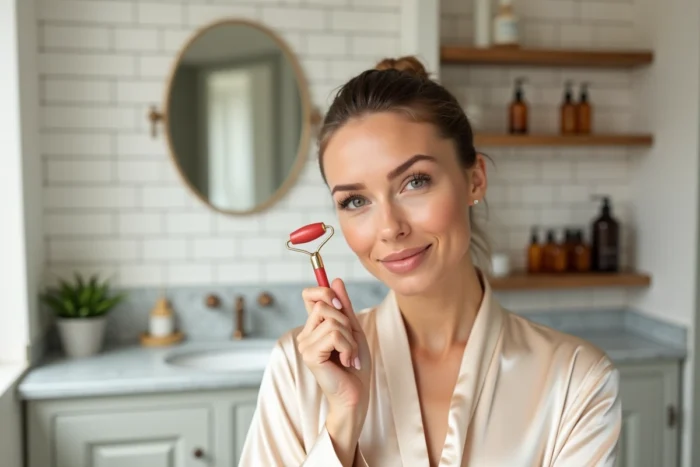
Beauty in everyday life relies on a set of technical gestures whose effectiveness depends less on the number of products used than on their suitability for skin type and actual needs. Understanding the mechanisms behind current trends in skincare, makeup, and hair allows for sustainable choices rather than following fleeting fads.
European Cosmetic Regulation and Label Reading
Before discussing routines or trends, a major regulatory change will alter how beauty products are presented on shelves. European regulation is gradually expanding the list of allergens to be declared on cosmetic packaging. The number of substances involved will increase from 24 to over 80 when regulatory thresholds are met.
In practical terms, INCI lists will become longer on cream bottles, facial treatments, and hair products. For those suffering from skin intolerances, this transparency makes it easier to identify irritating components. Knowing how to read an INCI label becomes a beauty reflex as useful as choosing a good sunscreen.
This evolution also pushes brands to reformulate. Long-lasting and waterproof textures, which sometimes relied on PFAS (per- and polyfluoroalkyl substances), are facing gradual restrictions in several countries. Entire ranges of high-performance makeup will need to offer alternatives, reshaping the available offerings. A useful resource to explore references and compare formulations remains https://www.cosmetiques-beaute.net/, which provides an overview of products and brands.
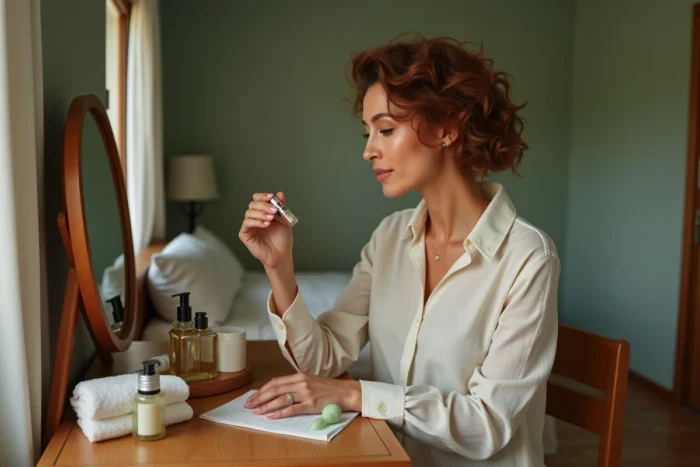
Facial Care Routine: Minimalism as a Technical Basis
The trend of minimalism in facial care is not just about using fewer products. It is based on a simple dermatological principle: each layer applied to the skin must have a specific function. Layering serum, essence, ampoule, cream, and oil without coherence can disrupt the hydrolipidic film.
An effective routine for most skin types consists of three steps.
- A cleanser suitable for skin pH (around 5.5), used morning and evening to remove sebum, pollution, and makeup residue without stripping
- A targeted active treatment (hyaluronic acid for hydration, niacinamide for imperfections, retinol for cell renewal) applied to clean, slightly damp skin
- A sunscreen in the morning, even on cloudy days, as UV rays remain the primary factor in premature skin aging
A common pitfall is adding a product for every new trend spotted on social media. Dermatologists regularly warn about overload dermatitis, caused by the accumulation of incompatible actives. Combining retinol with a powerful exfoliating acid in the same application can lead to redness and peeling.
Adapting the Routine According to the Season
In summer, the moisturizer can be replaced with a lightweight serum under sunscreen. Heat stimulates sebum production, and a product that is too rich may overwhelm the skin. In winter, a plant oil (jojoba, squalane) added to the night cream compensates for dehydration caused by heating.
Hair and Scalp Trends: Scalp Care Gains Ground
Scalp care, long reduced to anti-dandruff shampoo, has been structured as a distinct category. Brands now offer serums, exfoliants, and masks specifically formulated for the scalp, with actives borrowed from facial skincare.
The principle is logical: a healthy scalp produces healthier hair. Excess sebum, styling product residues, and pollution clog hair follicles. A gentle scalp scrub once a week, followed by a soothing serum, can improve hair growth and reduce itching.
The curly girl method, popularized for textured and curly hair, illustrates this approach. It is based on eliminating harsh sulfates and non-water-soluble silicones, in favor of co-washing (washing with conditioner) and leave-in treatments that respect the natural curl.
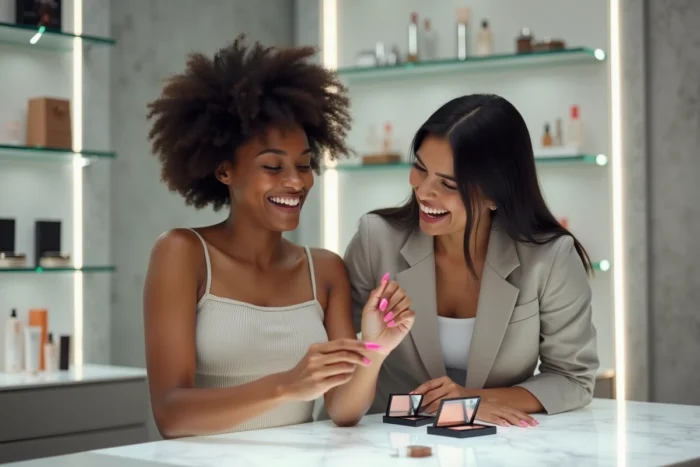
Makeup and Sunscreens: Reformulations Underway
Restrictions on PFAS particularly affect long-wear foundations, waterproof mascaras, and certain sunscreen products that used these substances for their water and sweat resistance. Replacement formulations favor biodegradable polymers, with textures sometimes different from what users were accustomed to.
For sunscreen products, the trend is moving towards mineral filters (zinc oxide, titanium dioxide) in micronized versions that leave less white residue than before. These filters have the advantage of acting immediately upon application, without the activation delay of certain chemical filters.
Hybrid Care-Color Makeup
BB creams and CC creams paved the way, but the category has expanded. Today, there are lipsticks enriched with hyaluronic acid, blushes infused with vitamin E, and mascaras containing peptides. The idea is to treat the skin or lashes while applying makeup.
- Serum foundations combine light coverage and moisturizing actives, suitable for skin that cannot tolerate heavy textures
- Squalane-based highlighters provide a natural glow while nourishing the skin barrier
- Tinted lip balms with SPF protect an often-overlooked area during sunscreen application
This convergence between care and makeup responds to a desire for simplification. Reducing the number of products applied decreases the risk of interactions between actives and the time spent in front of the mirror.
The coming months will therefore focus on two axes: increased transparency of compositions, driven by the new European regulatory framework, and the search for formulas that serve dual purposes. Choosing a beauty product requires reading the label as much as testing the texture. The brands that will survive these changes are those that manage to reformulate without sacrificing effectiveness.